shelf decor
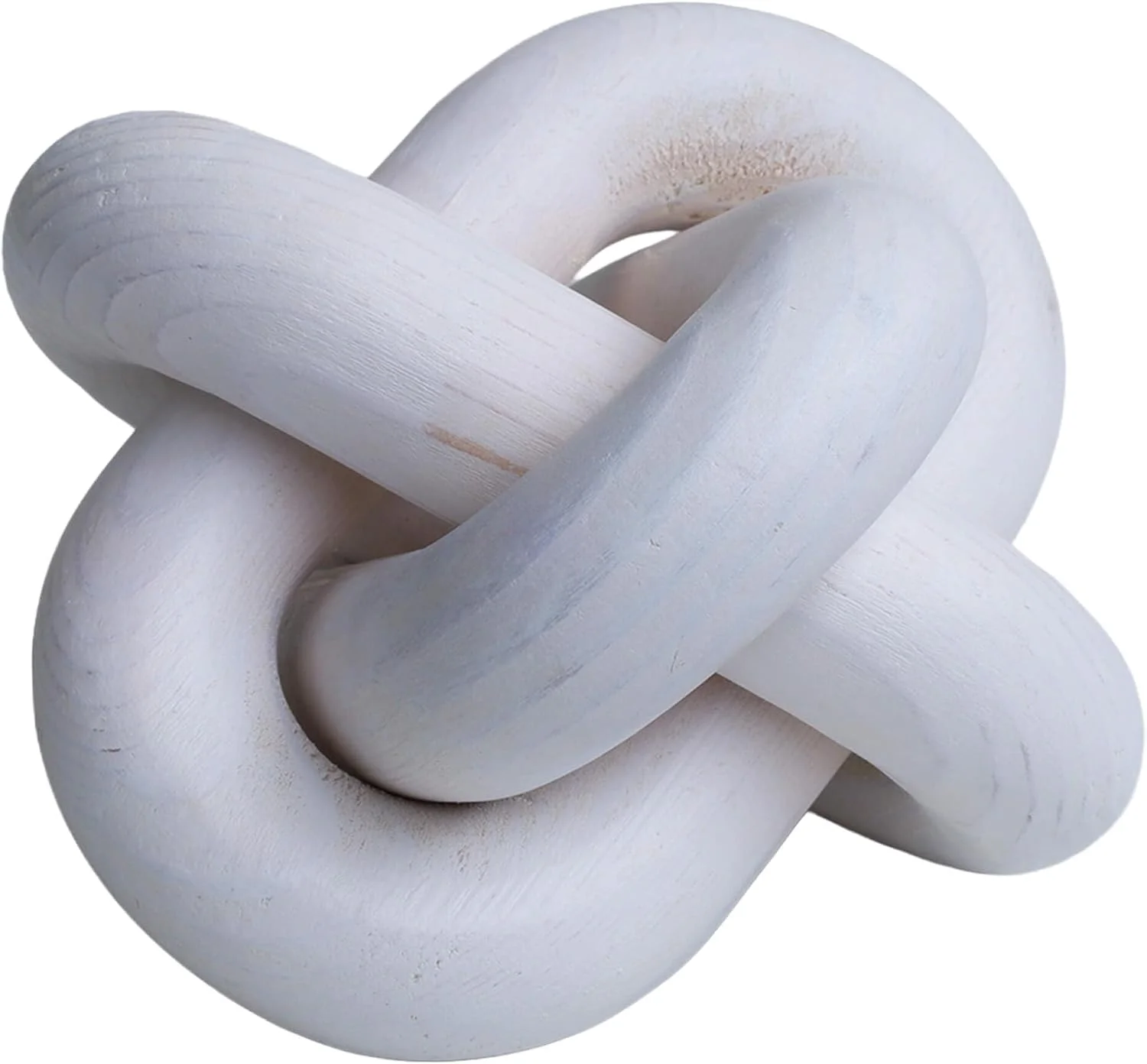
White wood knot sculpture
Three interlocking wooden links form a hand-carved white accent for shelves, coffee tables and bedside surfaces.
THE ROOMORA DECOR EDIT
Give books and favorite objects a clear rhythm with varied heights, small groups and room between them.
Explore the edit
Styling inspiration; pictured objects are illustrative.
A THOUGHTFUL START
A shelf works best when the eye can distinguish each group. Build around what you already want to keep, then use a few accents to vary the outline.
The aim is a readable arrangement, not a perfectly filled grid. Leave some stretches of shelf visible.
1 CONSIDERED DETAILS
shelf decor
Three interlocking wooden links form a hand-carved white accent for shelves, coffee tables and bedside surfaces.
Place the books and larger objects first. Check shelf depth, load limits and mounting instructions before arranging heavy pieces. Keep objects fully supported and avoid balancing them on narrow edges.
Alternate upright books with a lower horizontal stack. Offset the next group on the shelf above instead of making identical columns. Repeat one material in a few places to tie the whole bookcase together.
Keep frequently read books within reach and easy to remove. Avoid trailing accents over controls, cables or neighboring objects. Step back from the shelf and remove anything that makes the smaller groups blend into one dense row.
A few helpful answers
Choose objects with a small footprint and keep their bases fully on the shelf. A narrow upright book group may work better than a deep stack.
Leave enough to see the edges of each group and remove books easily. There is no fixed percentage for every shelf.
Vary the height and position of groups while repeating a material or color across levels.
A LITTLE INSPIRATION

The Roomora journal
Arrange living room shelves in five steps, balancing books, personal objects and the space between them.

The Roomora journal
Use horizontal stacks and upright groups to add structure without turning every surface into a display.